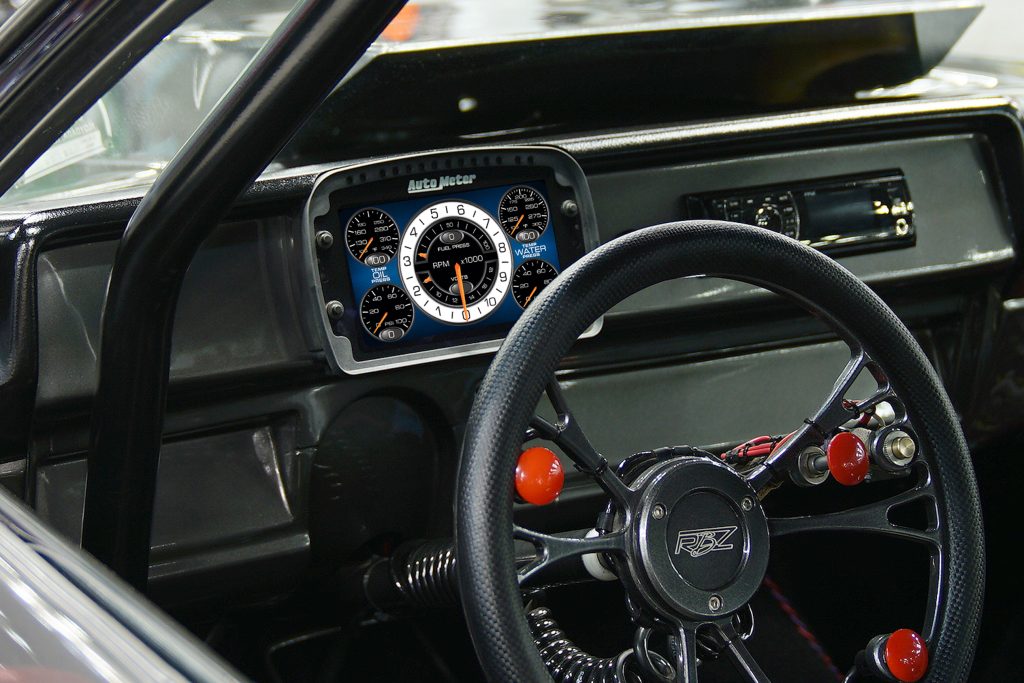
Few aftermarket parts have shaped car culture like the tachometer. For decades, the sight of an AutoMeter tach sitting proudly on the dash or bolted to the steering column has been a badge of honor. More than just an instrument, it became a signal to the world: this driver takes performance seriously.

Born on the Track
The story of AutoMeter’s iconic tachometer goes back to the company’s earliest days, when founder Vern Westberg was casting tachometer parts in his backyard. His grassroots approach reflected a racer’s mindset: build what’s needed, make it durable, and keep it accurate under pressure. That dedication to performance testing and innovation, combined with garage ingenuity and refinement on the track, laid the foundation for what would become one of the most recognized gauges in motorsports.
As horsepower increased and quarter-mile times decreased, racers required precision to keep their engines running. A tach wasn’t just a convenience; it was a tool for survival when it came to getting down the track the quickest. Knowing the exact RPM meant the difference between a clean pass and a blown motor. AutoMeter tachs earned trust in the pits by keeping it reliable when it mattered most.

From Drag Strips to Street Scenes
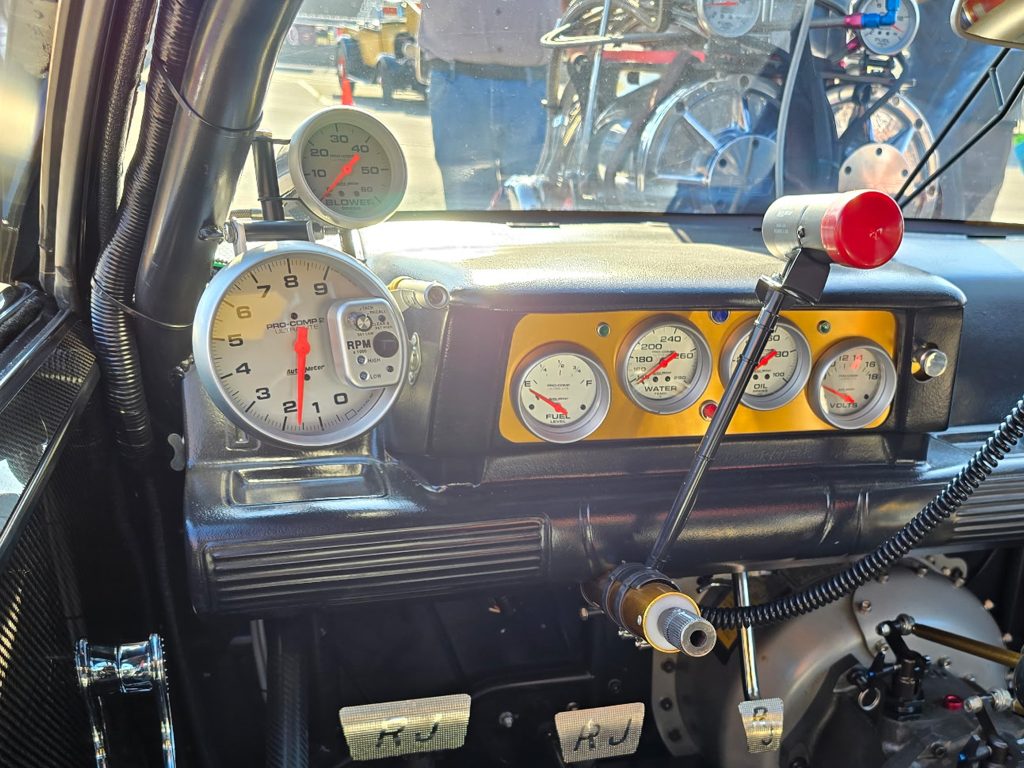
Throughout the ’70s and ’80s, the large AutoMeter tach and its iconic shift-light appeared on dashboards everywhere, establishing the Monster tach as the industry leader. Muscle car owners, street racers, and weekend cruisers adopted them not only for function, but for style. A dash with a towering tach said this wasn’t just a car, it was a machine built for speed.
Over the next 30 years, AutoMeter set the benchmark for performance instrumentation with a lineup that quickly became the industry standard. Iconic products like the Monster tachometer, Sport-Comp and Pro-Comp gauges, the lightweight Ultra-Lite and Phantom series, and the first-ever LED through-dial lit Cobalt gauges helped redefine how enthusiasts monitored their vehicles. With precision that held true even at high speeds and durability proven in the toughest racing environments, AutoMeter’s technology quickly set itself apart. Modifications like advanced vibration resistance and rapid response time set AutoMeter apart from the competition. The company also pushed boundaries with advanced data-logging systems, giving racers and performance builders access to insights like never before.
AutoMeter’s impact didn’t go unnoticed by the larger performance community. In fact, the Monster Tach was one of the charter inductees in Hot Rod Magazine’s Speed Parts Hall of Fame, highlighting its influence in shaping the aftermarket world.
That distinction underscores how the tachometer was never just a gauge, but rather it was a turning point in performance instrumentation.
Modern Influence
Today, tachometers are often built into digital dashes, but the culture remains. Modern builders, seen as today’s heroes of the automobile world, continue this quest for performance, precision, and authenticity. Selecting an AutoMeter tach has become a rite of passage in the journey of a builder, signifying a respect for tradition while embracing innovation. This choice ties present-day efforts to the mythic cycle of heritage, allowing builders to see themselves as part of a storied legacy in racing history. Whether it’s a retro tach on a GTO or a Monster Tach on a drag car, these gauges continue to inspire and challenge the next generation to push the boundaries of performance.
Adapting to the Times
AutoMeter tachometers represent a commitment to precision, pushing limits, and carrying forward a piece of racing tradition. They remind us that behind every serious build is a driver who cares about every detail, right down to the needle sweeping at redline. The round-shaped tachometer symbolizes a blend of heritage and high-tech innovation, ensuring that the passion for performance and precision endures in the new era of motoring. With the introduction of data acquisition tachometers, AutoMeter gave racers a tool to capture real-time RPM data, unlocking more precise tuning and improved run consistency. This could excite enthusiasts who are looking to merge traditional motorsport excitement with cutting-edge technology, ensuring AutoMeter remains at the forefront of performance instrumentation.